




































Effectively combating mealybugs: Natural methods for healthy plants
Mealybugs are pesky plant pests that love to hide in leaf axils, on stems, under leaves, or on roots. The good news: You can combat mealybugs naturally – helping your plants grow strong once again. In this guide, I will show you how to reliably identify an infestation, what really helps, and how to prevent them in the long term – including a gentle recommendation for using beneficial insects such as lacewing larvae against aphids & mealybugs.
Causes: Why do plants get mealybugs?
A mealybug infestation often occurs when plants are weakened or conditions become "too comfortable" for pests. These include dry heating air, poor air circulation, overcrowding, or a nutrient imbalance. Indoor plants (e.g., ficus, orchids, succulents) and sensitive potted plants are often particularly affected.
Typical triggers at a glance
- Dry air (especially in winter) and warm locations
- Overcrowded plants / poor air circulation
- Weakened plants due to lack of light or improper watering
- Introduction via new plants or contaminated pots/substrates
Recognition: How do you identify mealybugs?
Mealybugs are usually recognized by their cottony, white deposits. They love to sit hidden, which is why it is worth taking a close look at leaf axils, shoot tips, and under leaves. In addition, they secrete honeydew, which is sticky and can later promote sooty mold (black residue).
Typical symptoms
- White, cottony nests on leaves, shoots, or stems
- Sticky leaf surfaces (honeydew)
- Stunted growth, yellowish leaves, weak shoots
- Black residue (sooty mold) as a result of honeydew
🐞 Tip: If you spot mealybugs early, they are much easier to get under control. A combination of mechanical cleaning and the use of beneficial insects like lacewing larvae against aphids & mealybugs is particularly effective.
Combating: Natural methods against mealybugs
Important: Mealybugs have a protective wax layer, which is why "random home remedies" often only work halfway. It is better to rely on proven steps that work systematically: remove infestation hotspots, stabilize the plants, and use beneficial insects in a targeted manner if necessary.
1) Immediate action: Reduce infestation mechanically
- Isolate: Separate the infested plant from other plants.
- Wipe off: Remove mealybugs with a damp cloth or cotton swab (don't forget the leaf axils).
- Shower off: Thoroughly shower the plant (if possible), especially the undersides of the leaves.
- Pruning: Remove heavily infested shoot tips to quickly reduce the population.
2) Use beneficial insects: Lacewing larvae against mealybugs
For natural control, lacewing larvae are true "garden pros": They actively hunt for pests and help significantly reduce the infestation – especially if you start early and check consistently. Depending on the situation, you can choose between different variants:
- For direct application on plants: lacewing larvae against aphids & mealybugs
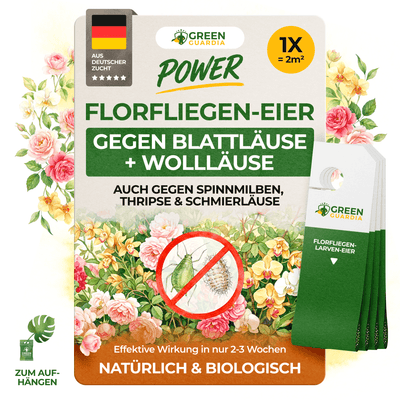
- For practical application as eggs (e.g., for regular releases): lacewing larvae eggs against aphids & mealybugs
- If hanging is easier for you (e.g., for multiple plants/shelves): lacewing larvae eggs for hanging
3) Strengthen the plant: Improve conditions
- Check location: Enough light, but no extreme heat (e.g., above a heater).
- Increase humidity: For indoor plants, regular spraying helps (if the plant can tolerate it).
- Stabilize watering routine: Avoid waterlogging, but do not let it dry out completely either.
- Monitoring: Check leaf axils and undersides of leaves 2–3 times per week.
✅ Practical note: Beneficial insects work best when you have previously removed the "bulk" of the mealybugs and subsequently keep the plant stable. For a natural approach, lacewing larvae against aphids & mealybugs are particularly suitable.
Prevention: How to stop mealybugs from returning
Mealybugs are persistent if they go unnoticed. With a few routines, you can significantly lower the risk – especially with indoor plants that stay in the same place for months.
Proven preventive measures
- New plants should be kept separate for 10–14 days and checked thoroughly.
- Regular visual inspection (leaf axils, shoots, leaf undersides).
- Do not place plants too close together – air circulation helps.
- Clean pots & tools (disinfect cutting tools).
- If problems recur, lacewing larvae eggs can be a useful natural component.
Frequently Asked Questions about mealybugs
How quickly do mealybugs disappear after treatment?
This depends on the severity of the infestation. If you reduce them mechanically (wiping/showering) and monitor the plant consistently, you will often see significant improvement within a few days. For persistent infestations, several steps over 2–3 weeks are normal.
Why do mealybugs keep coming back?
Often, individual nests remain in leaf axils or in hard-to-reach places. In addition, dry air, lack of monitoring, and weakened plants facilitate a quick return. Regular checks and stable environmental conditions are key.
Which natural measures really help against mealybugs?
The most reliable method is a combination: First, reduce the infestation mechanically, then improve plant conditions, and use beneficial insects if necessary. For using beneficial insects, lacewing larvae against aphids & mealybugs are a proven, natural option.
Which variant is more practical – larvae directly or eggs for hanging?
If you are treating individual plants in a targeted manner, direct application is often ideal. For multiple plants, shelves, or a larger stock, hanging is particularly convenient: lacewing larvae eggs for hanging.
Take action now:
If you have discovered mealybugs, the most important thing is to act early and stay consistent. Remove visible nests, stabilize plant conditions, and rely on natural helpers if necessary. For targeted, biological support, you can find suitable solutions with us – e.g., lacewing larvae against aphids & mealybugs or the practical variant lacewing larvae eggs.

